.png)


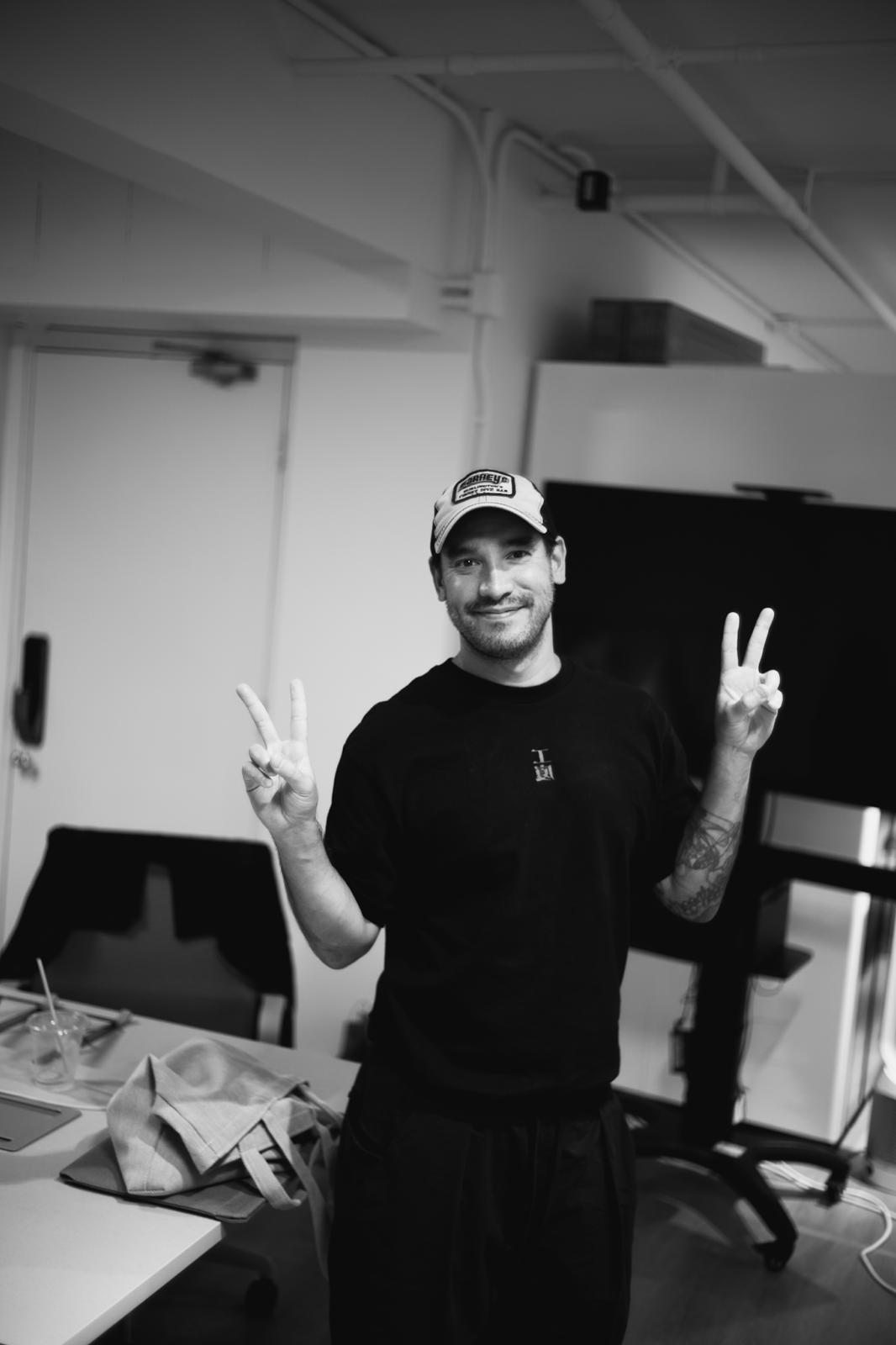
Tell us about yourself: your background, career, and any other information about you.
The short version of my story is that I was born and raised in Hong Kong. I went to university in the UK to study media studies and sociology. I did that for a year, and decided to put university on pause because I wanted to work. I had this idea: one year university, one year work.
[After that] I interned at this culture-based magazine. After three months of internship, they suddenly closed down. So I turned to the staff that was there and said, guys, we’re the team that’s making this mag. Let’s just do it ourselves. [From there] we started our own magazine. It was called Brouhaha. People liked the magazine, but we just couldn’t make it sustainable.
I found that HYPEBEAST was hiring an online editor. They met me and saw my resume and said, Oh, you’ve got some print experience; we’re actually doing a print version. So I joined to help develop the print magazine, and I ran that for about seven years.
[Later on] Edison Chen - who has CLOT, JUICE, 3125C - asked me to come forward to run their marketing in LA. I learned so much. Super fun experience. But then I realized that I missed working on magazines.
Let’s talk about you and RADII. What are some of the founding reasons why RADII is focusing on Asian culture, especially the Chinese streetwear scene?
Most of my media experience has always been focused on Western culture. So with RADII, I’m like, look, I’m back to Hong Kong. My mom is Chinese—I'm half Chinese. RADII is the perfect platform for me to focus all of my experience into sharing stories that are coming out of Asia.
As far as the English language still being the predominant universal language, most English-language media sites are from the West. Bigger names that are within that creative space that are from Asia normally just stick to an Asian-based audience.
A lot of the world's general aesthetic and vibe is still depicted by the Western perspective.
It's largely still seen through a Western lens. So it’s hard to showcase the truly authentic Hong Kong vibe that they easily understand. You have to talk in their language. Soon, the West will have to realize, okay, we kind of need to learn their language.
We’re just trying to balance or tip the scales between the rest of the world. You really need to start paying attention to what’s happening in Asia.
[And] we’re not doing it where it’s very on the nose, [like] “this is Asia, this person is Asian.” We’re just going, "this is what’s happening, this is a person - [and] yes, they happen to be from Asia."
Our goal is to be that bridge that transcends both. We’re focusing solely on everything that’s coming out of Asia within the creative space, but we’re showcasing it to the rest of the world.
What do you think about Chinese fashion scenes, especially for Gen Z customers right now?
One thing that’s interesting that I’m noticing with China is that they’re not afraid to have fun. [They] really take the risk and have fun and go beyond.
Why do you think that’s happening in China right now?
I think it’s because China has been closed off for so long… It’s just like a kid that’s finally allowed in the candy shop, and they’re like, oh my God, let me just try everything.
Do you have any specific rising culture that you like?
There’s one called Xiexiu. It’s a mindset that’s coming out of the youth of China, where they’re almost making fun of traditional methods as a form of rebellion. It’s almost being rebellious for the sake of being rebellious.
There's actually a lot of open-mindedness coming out of China's youth. [For example,] there are psychology students in the middle of their training deciding to open up street booths in China. They’re offering what skills they have so far. They’re like, “We’re a free therapist booth. Come through if you trust us.”
Any advice for readers who seek to become a successful editor-in-chief?
The first thing is, you have to be a good listener. Try to properly understand and feel what someone is saying when you're listening. Because when you feel it, you can relay that information and that emotion to the audience.
Outside of that, truly just try to have fun with what you’re doing. Really find what you like doing and focus on that. You will always do your best work if you enjoy something.


